
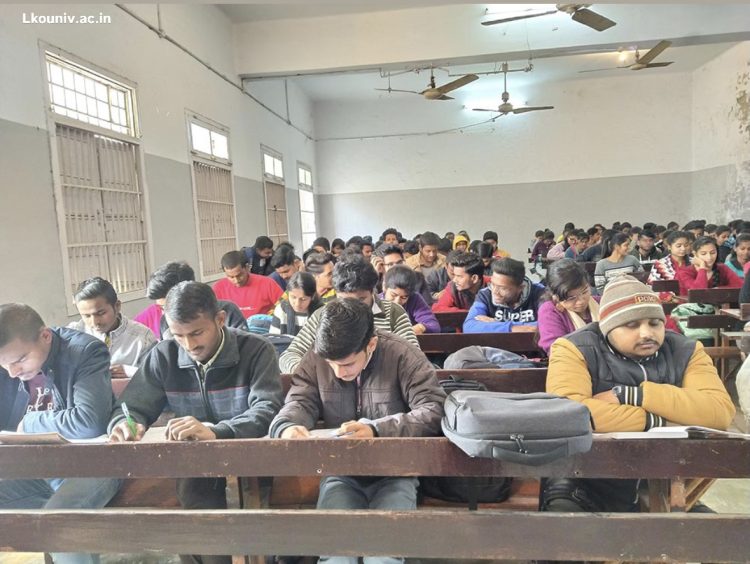
My younger self believed that strict attendance rules existed to secure our learning. I thought discipline and education went hand in hand. But growing up and observing classrooms more closely led me to a different realization, compulsory attendance has very little to do with learning and everything to do with a deep-rooted pedagogical hollowness.
If an institution has to force its students to be present, it raises a deeper question; what is happening inside those classrooms that makes learning so uninviting?What we are witnessing is not a lesson on discipline, but a fear of empty benches that is rooted in theinsecurity of institutes.
Compulsory attendance does not create engagement. It merely creates an illusion of engagement. Registers may be full, but minds often are not. Students attend not because they want to learn, but because they are afraid of being detained, barred from giving the exam, or failed.
Walk into any college corridor during lecture hours and you will find classrooms that are full, yet strangely silent. Not with attention, but with indifference. Students sit, not to learn, but to be counted. Attendance has reduced education to a ritual of presence, bodies on benches, names on a register, minds elsewhere.
This is how the culture of signatures replaces the culture of curiosity. When the system does not ask whether a student understood the lecture, only whether the student was present for it then learning becomes secondary, and compliance primary. Classrooms no longer feel like spaces of exploration. They feel like checkpoints students pass through, not places they grow in.
Over time, this culture of compulsory attendance has shaped student psychology in a quiet but damaging way. Students walk into classrooms with attendance registers on their conscience, not questions in their minds. They come for signatures, not for learning.
This mindset does not stop with students, it affects teachers too. When professors see that most students are present only out of compulsion, many gradually lower their own expectations. Teaching becomes routine, not responsibility. Yet there are teachers who teach with passion, who explain with sincerity, and who deserve classrooms filled with curious minds. But even in such classrooms, students often sit only to fulfil attendance requirements. The system turns genuine learning into formality and sincere teaching into background noise.
Education should not be driven by a negative force like the fear of detention or failure. It should be driven by a positive force, curiosity, excitement, and the anticipation of learning. A classroom should not feel like an obligation one must endure, but a space one wants to enter. Perhaps the real measure of an education system is not how strictly it enforces attendance, but how naturally it attracts students to learn.