
University life is not just about lectures, assignments, presentations, and exams. It is also about memories. The kind of memories that quietly shape who we become. Among all the experiences that make campus life meaningful, festivals hold a very special place.
When we first enter university, everything feels new and slightly overwhelming. New faces, new classrooms, new expectations. Many of us leave our homes for the first time. In those early days, festivals become more than just celebrations. They become a comfort. They give us a reason to come together, to talk to someone new, and to feel a little less alone.
Unlike celebrations at home, university festivals are beautifully diverse. Students come from different states, cultures, and backgrounds. Each person carries their own traditions and stories. When a festival is celebrated on campus, it becomes a blend of all these identities. One friend explains the meaning behind a ritual. Another shares food from their region. Someone teaches a traditional dance step. Slowly, differences turn into connections.
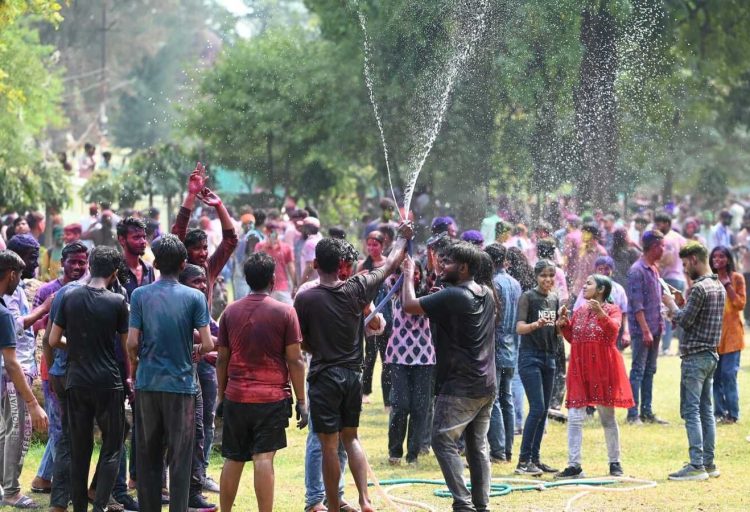
With Holi just around the corner, the excitement on campus of Lucknow University is already visible. Groups are planning what to wear, where to gather, and how to celebrate responsibly. The thought of colors, music, laughter, and shared moments fills the air with anticipation. For many students staying away from home, this will be their first Holi without their families. Yet, there is comfort in knowing that the hostel courtyard, the common room, or the campus lawn will soon be full of familiar faces ready to celebrate together.
Holi, often called the festival of colors, carries a deeper meaning. It symbolizes new beginnings, forgiveness, and the victory of good over evil. On a university campus, it also becomes a reminder to let go of small misunderstandings and start fresh. It encourages students to step out of their comfort zones, to smile at someone they have never spoken to, and to build new friendships.
Festivals on campus are not only about enjoyment; they also teach responsibility. Organizing celebrations requires teamwork. Students plan events, manage budgets, decorate spaces, arrange music, and ensure safety. Cultural committees and volunteers work behind the scenes, balancing academics with preparations. Through this process, students learn leadership, cooperation, and problem-solving,lessons that no textbook can fully teach.
There is also something deeply comforting about celebrating together when we are away from home. Festivals can make us miss our family more than usual. We think about how things are done back home,the familiar smells from the kitchen, the laughter of relatives, the small traditions unique to our house. But then a friend offers us homemade sweets sent from their home. Someone insists on joining their group for dinner. Slowly, the campus starts to feel less like a temporary place and more like a second home.
Even the smallest gestures matter. A group of friends decorating a room with simple colors. Sitting together after classes to talk about childhood memories of Holi. Sharing playlists and planning group photos. These simple acts create bonds that often last far beyond graduation.
In a world where students constantly worry about grades, internships, and future careers, festivals offer a pause. They remind us that life is not only about competition and achievement. It is also about joy, connection, and shared laughter. They give us permission to celebrate the present moment.
As Holi approaches, the campus will soon be filled with bright colors and brighter smiles. But beyond the colors, what truly matters is the sense of belonging. In those moments of celebration, strangers turn into friends, and friends slowly become family.
Because in the end, festivals in university are not just events marked on a calendar. They are the threads that weave different lives together, creating memories that stay colorful long after the celebrations end.
