
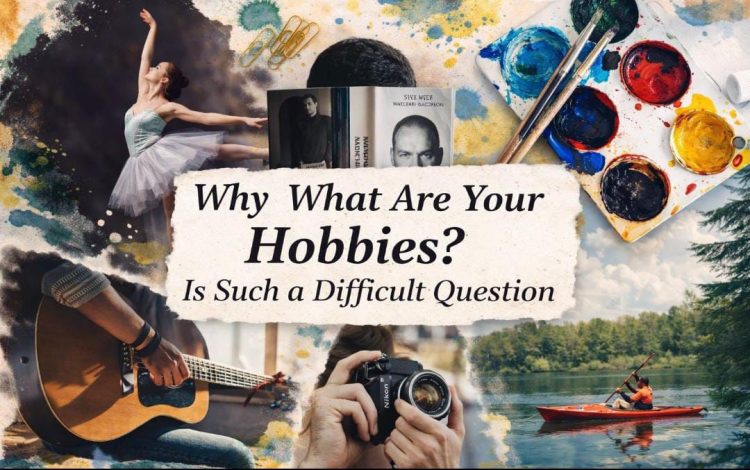
“What are your hobbies?”
It is one of the most common and simplest questions people ask out of genuine curiosity about you. It appears harmless, even friendly. The question shows up in first conversations, on dates, in classrooms, during interviews, and sometimes in the middle of casual small talk.
Yet every time someone asks me this question, I pause with a strange discomfort. Not because I have nothing to say, but because something unusual happens in my mind. Instead of answering naturally, I start thinking about the audience. I begin evaluating possible answers the way someone might evaluate outfits before stepping outside.
What answer would sound interesting?
What answer would make me appear more impressive?
Or perhaps more importantly, what answer would make me sound cool?
This is where the idea of “cool” quietly enters. It has become a subtle form of social currency in today’s generation. We rarely say it out loud, but we are constantly measuring it. People with interesting hobbies appear more fascinating, more alive, and more desirable to know.
Playing the guitar sounds cool.
Travelling frequently sounds adventurous.
Photography sounds creative.
But reading quietly in a corner? Thinking deeply about ideas? Writing reflections that no one sees?
Those things rarely make exciting answers in conversation.
And so, the simple question, “What are your hobbies?”, sometimes becomes less about curiosity and more about presentation. It begins to feel like a small personality resume where we are expected to display interesting fragments of our identity.
Which brings me to something that bothers me even more about this question.
Before defining the word hobby, I find myself questioning the word that comes before it: My? “My hobbies?”
The question is no longer simply about activities. It becomes a question about identity. It is asking: Who are you when you are not working? What do you choose to do with your free time? What are the things you love enough to keep returning to again and again?
And suddenly, answering it feels strangely intimate.
If hobbies are simply things that bring us joy, why do we feel the need to filter them through other people’s perceptions? Why does our mind automatically consider what will sound interesting rather than what is honest?
Perhaps the problem lies in the quiet transformation of hobbies themselves. What once used to be private sources of joy are slowly becoming visible markers of personality. In the age of social media, hobbies often function like signals. They show the world what kind of life we are living.
A person who travels frequently appears adventurous.
A person who plays music appears artistic.
A person who paints or dances appears creative.
These hobbies are easily visible. They are performative in a way that fits neatly into pictures, videos, and short descriptions.
But many hobbies are invisible.
Thinking is invisible.
Reading is invisible.
Watching birds is invisible.
Sitting in a cafe and journaling is invisible.
Writing thoughts in a notebook is invisible.
These activities quietly shape a person’s inner world, yet they rarely translate into impressive conversation answers. The things that deeply influence who we are often make the least dramatic stories.
This is where attention begins to matter. The more dramatic an activity appears, the more visibility it attracts. In many ways, attention has become a modern measure of significance.
But the downside is that this creates a strange hierarchy of hobbies. Some are socially celebrated, while others remain quietly personal. Perhaps that is why many people hesitate when asked this simple question.
The hesitation is not because we lack interests. It is because we are unsure which version of ourselves to present.
Maybe the real purpose of hobbies was never to impress anyone. Maybe they were simply ways of spending time with curiosity and joy—small acts we return to because they make our inner world richer, not because they make our lives appear interesting from the outside.
Perhaps the most honest answer to the question “What are your hobbies?” is simply this:
The things I return to when nobody is watching.
The things I do simply because they belong to me.
