
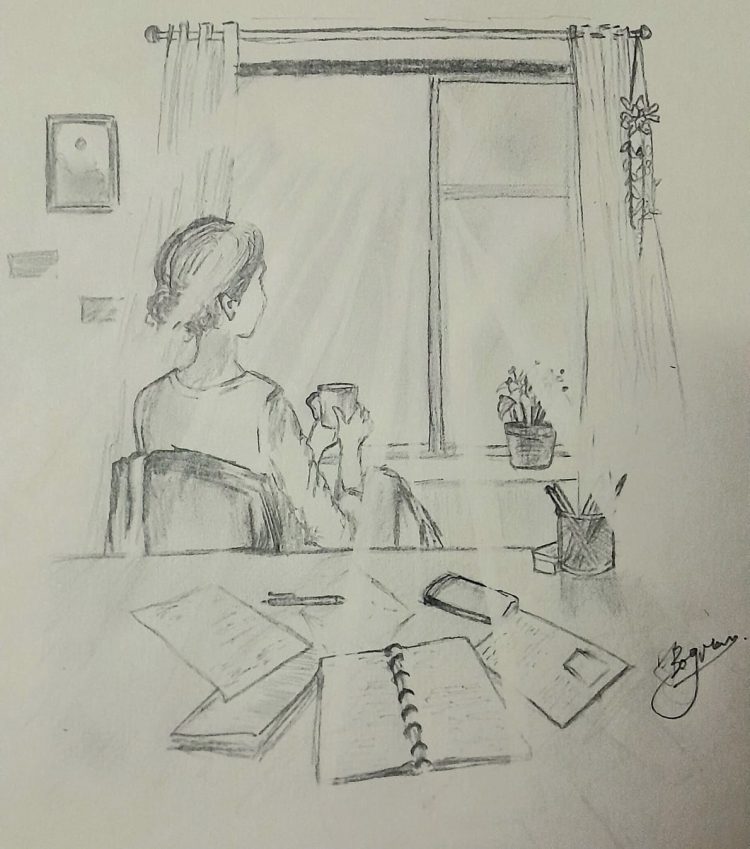
For most of my life, I believed an ordinary day was the starting point of existence. Waking up, moving through the day, studying, working, laughing with people, returning home tired but stable.
It all felt like the baseline of life. But illness changes the way you see the world. When your body begins to struggle, when energy becomes uncertain, the life you once ignored suddenly becomes visible. You start noticing that what we casually call a “normal life” is not guaranteed at all. I write this not to argue that we should stop dreaming or wanting more from life. Ambition is deeply human. But this reflection exists for a different reason: to recognize that many of the things we already possess…
Health, stability, simple routines…
are not ordinary at all. They are quiet forms of luxury that only reveal their true value when they begin to disappear.
The Day We Never Notice
A normal day rarely begins with wonder.
An alarm rings. You wake up with a little irritation. The morning feels routine. You walk to the kitchen, perhaps make tea, perhaps scroll your phone. Soon the day pulls you forward: classes, work, conversations, responsibilities. By evening you are tired, and the cycle prepares to repeat.
Nothing about this day feels extraordinary.
Yet there is a quiet truth hidden inside it: the ability to live a normal life is one of the greatest privileges a human being can experience.
We call it “ordinary” only because we experience it often. But historically and globally, the conditions that form a normal day:
food, health, stability, safety, and connection—are not universal at all. They are rare achievements of civilization.
The philosopher Epictetus, who lived part of his life as a slave, once wrote:
“Do not seek for things to happen the way you want them to happen. Rather, wish that what happens, happens the way it happens, and you will be happy.”
What he understood two thousand years ago is something modern life constantly makes us forget: we often fail to recognize the value of the life we already possess.
The Miracle of an Ordinary Meal
Food is one of the clearest examples.
Opening a refrigerator and deciding what to eat feels normal in many parts of the world. Yet according to the Food and Agriculture Organization (FAO), more than 730 million people globally face chronic hunger. Even more striking, around 3.1 billion people cannot afford a healthy diet.
Historically, the situation was even harsher. Famine was a recurring part of life across continents for centuries. In medieval societies, poor harvests could destroy entire communities. Food scarcity shaped economies, migration, and politics.
In that context, the ability to eat three meals a day with variety and choice is not simply convenience. It is abundance.
Psychological research by Robert Emmons and Michael McCullough on gratitude found that people who consciously appreciate basic necessities like food report higher life satisfaction and lower stress. In other words, recognizing the value of simple things has measurable effects on human wellbeing.
The ordinary sandwich we eat without thinking would have looked like wealth to much of human history.
A Body That Quietly Carries Us
Another invisible privilege is the body itself.
We criticize it constantly. Too tired, too slow, not attractive enough, not strong enough. Yet a functioning body…one that walks, breathes, and carries us through daily life—is an extraordinary biological achievement.
The World Health Organization estimates that over 1.3 billion people live with significant disabilities, while millions more live with chronic illnesses that transform basic activities into daily struggles.
To climb stairs without pain.
To breathe without effort.
To speak clearly and move freely.
These things feel natural only because they happen automatically.
The Roman poet Virgil wrote a line that still echoes today:
“The greatest wealth is health.”
For most of human history, this wealth was fragile. Infection, injury, and disease often ended lives early. In 1800, the global average life expectancy was around 29 years. Today it exceeds 70 years.
Modern medicine has quietly extended human life in ways our ancestors would have considered miraculous.
Yet because we grow accustomed to it, we rarely pause to notice.
The Privilege Hidden in Work
Complaining about work has become almost universal.
The commute is exhausting. The tasks feel repetitive. Deadlines create stress. But behind these frustrations lies something deeper: stability.
According to the International Labour Organization, hundreds of millions of people around the world still lack stable employment or safe working conditions. For many, work is not a structured career but daily survival.
Having a job usually means several invisible systems are functioning around us: education, economic stability, transportation, technology, and law. Without these systems, the concept of a “normal job” cannot exist.
Psychiatrist Viktor Frankl, writing after surviving concentration camps, observed something profound about work and meaning:
“Life is never made unbearable by circumstances, but only by lack of meaning and purpose.”
Purposeful work…even modest work…can give structure and meaning to life. But the opportunity to pursue such work depends on a level of societal stability that many parts of the world still struggle to achieve.
The Quiet Gift of Safety
Safety is perhaps the most invisible luxury of all.
Closing the door at night and sleeping peacefully feels natural. Yet millions of people cannot rely on this basic certainty.
According to the United Nations High Commissioner for Refugees, more than 100 million people worldwide are forcibly displaced due to conflict, persecution, or disasters. Many live in temporary shelters or refugee camps where the future is uncertain.
Housing researchers estimate that 1.6 billion people lack adequate housing.
When safety disappears, the human brain changes. Neuroscience research shows that chronic insecurity triggers constant stress responses—elevated cortisol levels, anxiety, and difficulty focusing on long-term goals.
In other words, stability is not merely comfort. It is the foundation that allows human development, creativity, and education to flourish.
The Most Undervalued Wealth: Human Connection
Perhaps the greatest source of human wellbeing is not material at all.
It is relationships.
The Harvard Study of Adult Development, one of the longest-running studies in history, followed participants for more than 80 years. Its conclusion was striking: the strongest predictor of happiness and health in old age was not wealth or fame, but the quality of relationships.
Friendship. Family. Trust.
These small bonds shape our lives more than we realize.
And yet loneliness is rising worldwide. Studies suggest that chronic loneliness can increase mortality risk by nearly 30 percent, comparable to serious health risks like smoking.
The philosopher Aristotle recognized this truth centuries ago:
“Man is by nature a social animal.”
A simple dinner with people who care about us may appear ordinary, but it carries immense psychological power.
Why We Stop Noticing
If ordinary life is so valuable, why do we treat it as insignificant?
Psychology offers an explanation called hedonic adaptation.
Humans quickly adapt to improvements in life. What once felt exciting soon becomes normal. A new home, stable income, good health…over time, the brain stops registering them as special.
Researchers Lyubomirsky, Sheldon, and Schkade proposed that while circumstances affect happiness, a large portion of wellbeing depends on how we mentally engage with our lives.
In other words, appreciation is not automatic. It is a skill.
The Buddhist concept of “beginner’s mind” encourages people to experience everyday moments as if encountering them for the first time. The taste of tea. The warmth of sunlight. The quiet rhythm of breathing.
When attention returns, the ordinary reveals its depth.
Relearning How to See
Recognizing the value of a normal life does not mean abandoning ambition. Progress, dreams, and goals remain essential parts of human nature.
But there is a difference between striving for more and overlooking what already exists.
The morning routine we rush through.
The safe walk home.
The body that wakes up ready for another day.
These are not empty details. They are the structures of a meaningful life.
The philosopher Seneca once wrote:
“It is not the man who has too little, but the man who craves more, that is poor.”
Modern life often trains us to focus on what is missing. Yet when we pause long enough to observe, we may realize that many of the conditions we call “normal” would have looked like extraordinary fortune to most people in human history.
The Extraordinary Ordinary
A normal life rarely looks dramatic.
It is made of repeated mornings, simple meals, routine responsibilities, and quiet conversations. From the outside, it appears unremarkable.
But look at it through the lens of history, philosophy, and global reality, and its meaning changes completely.
Food.
Health.
Work.
Safety.
Relationships.
These are not small things.
They are the foundations of human flourishing. They are what civilizations strive to create and what millions of people are still struggling to reach.
And perhaps that is the most humbling realization of all:
The ordinary life we often overlook is not something trivial.
For much of the world, and much of history, it would look like a miracle.