
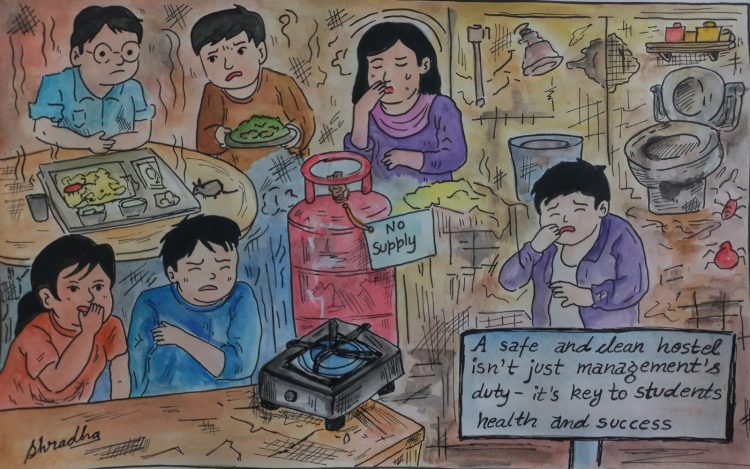
Life in university hostels often shapes a student’s daily rhythm— what they eat, how they study, and even how they feel. At Lucknow University, conversations with hostellers across different hostels reveal a mixed reality: while some facilities function smoothly, concerns around food quality, supply systems, and student welfare continue to surface.
A Divided Experience Across Hostels
Not all hostels share the same story. In certain boys’ hostels like Mahmudabad, Habibullah, and Subhash, students describe relatively stable conditions. Food is served on time, washrooms are cleaned daily, and electricity supply has remained consistent over the past couple of years. These accounts suggest that the hostel administration, in some cases, is maintaining basic standards effectively.
However, even within these spaces, issues persist. The rise in mosquitoes due to seasonal changes has raised health concerns among students, with fears of diseases like dengue.
Additionally, the recent shift from LPG gas to coal-based cooking—reportedly due to supply issues—has affected cooking methods and, potentially, food quality. While some hostels provide amenities like common refrigerators and microwaves, others lack these basic conveniences. Such inconsistencies create an unequal living experience among students within the same university.
Even smaller issues, such as malfunctioning water coolers, add to daily inconvenience. When such problems occur frequently and remain unresolved, they contribute to overall dissatisfaction.
The LPG Crisis and Its Ripple Effects
One of the most significant ongoing challenges is the shortage of LPG cylinders. Across multiple hostels, students report that meals are now being prepared using coal or firewood. In some cases, hostel authorities have openly acknowledged that this shift may compromise the quality and regularity of food.
For instance, in certain girls’ hostels, students were reportedly given two stark options: either continue staying with limited and less properly prepared food or vacate the hostel temporarily. Such decisions highlight the severity of the supply disruption and its direct impact on students’ daily lives.
The effects are already visible. In some hostels, staple items like chapatis have been discontinued, leaving students with limited meal options such as rice. This not only affects dietary balance but also raises concerns about long-term nutrition.
Food Quality: A Major Point of Concern
While supply issues explain part of the problem, several students point to deeper concerns about food quality and hygiene. Reviews collected from hostellers describe meals as “tasteless,” “unhygienic,” and insufficient in quantity. Complaints range from excessively oily dishes to poorly prepared items like hard puris that are difficult to chew.
More troubling are accounts of food safety lapses. Some students reported incidents of food poisoning, allegedly caused by improperly prepared dishes. Others mentioned finding insects in rice or detecting foul smells in food. Such experiences not only disrupt daily life but can also have serious health implications.
Adding to these concerns are circulating videos on the internet that appear to show contamination in mess food, including the presence of rodents or their remains. While these instances may not represent all hostels, they contribute to a growing sense of distrust among students regarding mess hygiene.
The Human Impact: Health and Academics
Food is not just a necessity; it directly affects a student’s ability to function. Many students admit that due to dissatisfaction with hostel meals, they often resort to ordering food from outside. While this offers a temporary solution, it places a financial burden on students and is not always a sustainable or healthy alternative. Some girls also mentioned “pocket money itni nahi milti, jo hum khana order kr le har roz, is liye bhookhe hi so jaate hai.” This clearly highlights, how students from all backgrounds live in these conditions, trying to survive at the costs of their health.
Health-wise, irregular meals, poor nutrition, and instances of food contamination can lead to fatigue, digestive issues, and more serious illnesses.
Reports of students being hospitalized due to food poisoning underscore the urgency of addressing these concerns.
Academically, even small disruptions—like missing breakfast due to insufficient quantity or delayed service—can have a ripple effect. With tight class schedules, students who fail to get meals on time may attend lectures hungry or skip them altogether. Over time, this affects concentration, productivity, and overall academic performance.
Fear and Silence Among Students
An important aspect that emerges from these accounts is the hesitation among students to speak openly. Many hostellers reportedly avoid sharing negative feedback, fearing repercussions or administrative action. Some students mentioned being warned about possible expulsion or disciplinary measures. They say and we quote, “mera naam na aaye kahi, nikaal denge hostel se varna mujhe.”
This environment of fear makes it difficult to assess the full extent of the issues. It also highlights the need for safer and more transparent feedback mechanisms within hostels. In some cases, this results in students downplaying issues or presenting an overly positive image of hostel life.
The lack of anonymity in complaint systems further discourages students from coming forward. Without a safe and confidential platform to voice grievances, many choose to adjust rather than risk confrontation. Over time, this normalization of problems can lead to frustration, stress, and a sense of helplessness among students, making it not just a logistical issue, but also one that affects their mental well-being and sense of security within their own living space.
The Way Forward
The situation in Lucknow University hostels is not entirely bleak, but it does call for attention. While certain hostels demonstrate that proper management is possible, others highlight gaps that need urgent intervention.
Addressing the LPG supply issue, ensuring consistent food quality, maintaining hygiene standards, and creating a safe space for student feedback are essential steps. Equally important is bridging the gap in facilities across hostels to ensure a more uniform and fair living environment.
Ultimately, a hostel is more than just accommodation—it is a student’s home. Ensuring its safety, cleanliness, and reliability is not just an administrative responsibility but a commitment to student well-being, health, and academic success.
