
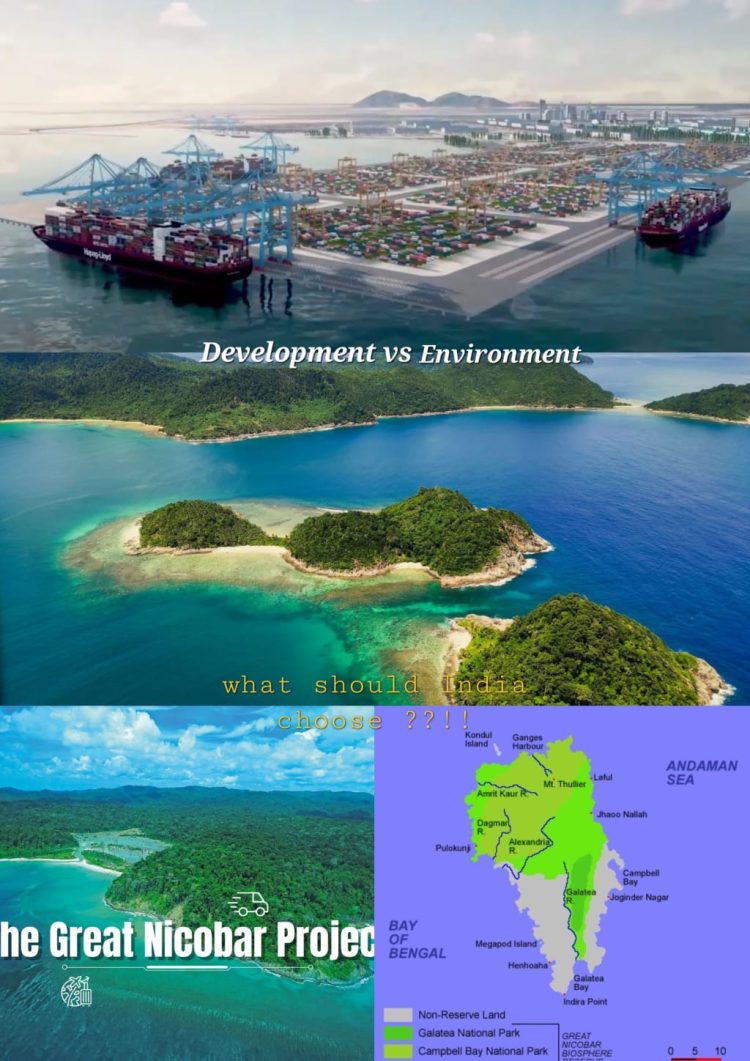
Scattered over 262 km length and the area of 1653 sq km-Located in the southern part of the Andaman and Nicobar union territory ,India are the Nicobar islands. It has an approximate population of 36,000 which include indigenous reserve tribes like Nicobarese and Shompen. Its Ecosystem consists of 7,589 sq km forest area consisting of mangroves,epiphytes, woody climbers, and tropical fruit trees which support many wildlife species like leather back turtles, Nicobar megapode, crab-eating macaques, dugong, saltwater crocodiles, and coral reefs.
The Great Nicobar Island Project is a ₹72,000 crore mega-infrastructure plan cleared by the central government for Great Nicobar, the southernmost island of the Andaman & Nicobar archipelago. It sits just 90 nautical miles from Indonesia and flanks the Malacca Strait, through which ∼30% of global trade passes.The project was approved in 2021 under the Narendra Modi-led BJP government by the NITI AYOG of India with the ideas of strengthening India’s maritime presence in the Indo-Pacific, creating a transshipment hub to reduce reliance on foreign ports, and boosting trade.
The controversy regarding the project started when the opposition recently raised serious ecological and tribal rights concerns, with Rahul Gandhi (the leader of Congress party) visiting the site on April 28, 2026, leading to a debate of “Vikas vs Paryavaran” between the parties in May 2026.
I, myself being the author stand with the idea of development of the great Nicobar Islands as it enhances India’s naval capabilities and surveillance in the Indo-Pacific region, providing a crucial advantage near the busy East-West shipping route which will help India to gain strategic and defense advantages while keeping the dominance of hostile countries in check. The project includes developing an International Container Transshipment Terminal (ICTT) with a capacity of 14.2 million TEU, aiming to position the island as a major global trade hub helping India to gain a much more significant place in world economy and trading also providing India the power to regulate the shipments and cargos passing through this trade route reducing the chances of illegal import of prohibited substance. The project also plans to promote tourism, empowering the local economy and improving the island’s all over connectivity. The idea serves as a game changer for trade and security as it provides a strategic counterweight to hostile ports like Chinese ports and opens a new economic gateway at the mouth of Malacca Strait.
Although the project offers many advantages and a fair trade of opportunity but one must also address the problems related to the project one of them being that nicobar islands being situated in the Seismic Zone V, which is classified as the most seismically active region (Very High-Risk Zone) in India, increasing the overall chances and damages by tsunami and earthquake. They are also situated in high-risk zones for cyclones, making them a fragile region. The Nicobar Islands consist of no major rivers which means that bringing in more people will stress limited ground water and rain fed systems. The project also raises the question regarding the indigenous rights of the people living in Nicobar as the project area overlaps with the territories and the ancestral land of Shompen and Nicobarese people leading to questions regarding the cultural impact and as I will also affect the biodiversity of the area.
At the end the whole idea comes to a single thought that whether the Indian government will be able to develop such a massive project while preserving the biodiversity and the interests of indigenous tribes of the Nicobar islands
