
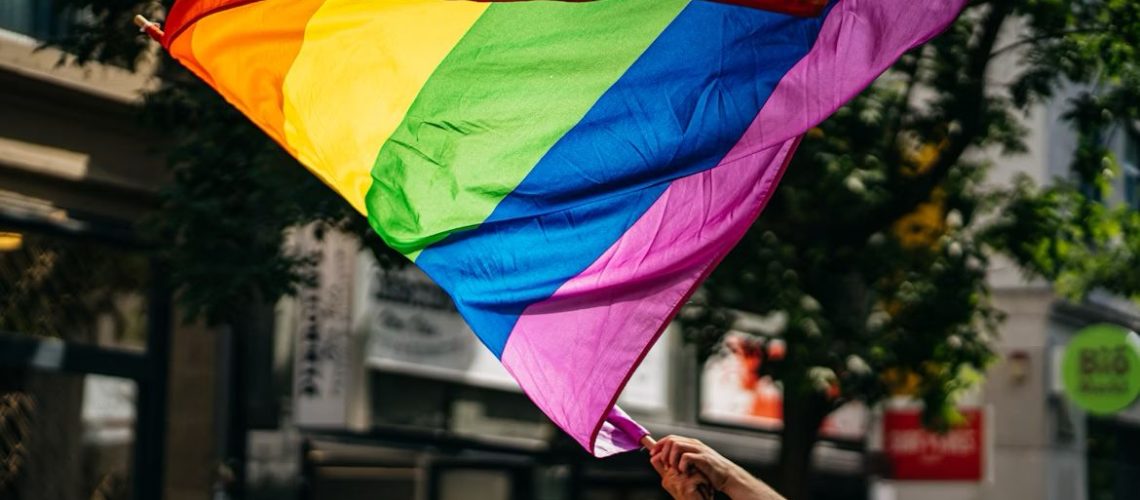
It is a truth universally acknowledged that in a heteronormative democracy, queerness will be tolerated-so long as it stays quiet, marketable, and non-threatening.
Every June, the world goes through a “phase” that erupts in rainbows.
Logos turn queer. Brands turn poetic. Influencers dig up last year’s captions.
Pride becomes both a spectacle and a sales pitch,loud enough to trend and soft enough not to threaten.
This is where Pride meets its shadow: Prejudice.
And unlike the rainbow, prejudice doesn’t fade after June -because discrimination doesn’t take a month off.
It lingers- in appointment letters never issued, in hospital beds refused, in classrooms too scared to teach honestly.
India may have decriminalized queerness, but it has not de-institutionalized bigotry. The system doesn’t need slurs to discriminate – it just needs silence.
PRIDE
Six Things Pride Is – and Two Things It’s Not
(inspired by Kay Ulanday Barrett, Lesley University, 2021)
1. Pride began as a riot.
In June 1969, a police raid on the Stonewall Inn , New York City sparked six days of unrest. LGBTQ+ patrons and neighborhood residents pushed back against the regularized police harassment they faced. This unrest, now called the Stonewall Uprising, marks a historical catalyst.
.2. Stonewall wasn’t the first time queer people fought back.
Before Stonewall, queer and trans communities had already staged acts of resistance across the U.S.:
- 1959: Cooper Donuts Riot, Los Angeles
- 1965: Dewey’s Lunch Counter Sit-In, Philadelphia
- 1966: Compton’s Cafeteria Riot, San Francisco
These events are less known, not less important. The selective memory of history often favors what fits neatly into myth.
3. Pride is intersectional.
There’s no version of queer liberation that isn’t also about race, class, and gender.
Black, Indigenous, Latine, and Asian American Pacific Islander (AAPI) activists have shaped the LGBTQ+ movement from its earliest days. Their stories are frequently sidelined in mainstream retellings, which often center whiteness and respectability.
In 2017, Philadelphia added black and brown stripes to the rainbow flag to draw attention to racism within LGBTQ+ spaces. The fact that this was considered controversial says enough.
4. Pride was first officially recognized in 1999.
President Clinton issued Proclamation No. 7203, officially designating June as Gay and Lesbian Pride Month.
Bisexual and transgender individuals were not included in this.
Earlier, Clinton’s Executive Order 13087 (1998) prohibited discrimination in federal employment based on sexual orientation-but not gender identity.
5. The scope of Pride expanded in 2009.
President Obama revised the proclamation to include bisexual and transgender communities.It was a rhetorical shift, not a structural one- but an important step toward recognition.
6. Pride is not exclusive- but access depends on context.
Straight and cisgender allies are welcome to celebrate, support, and advocate. But not every space during Pride is intended to be universal. Some events are created by and for LGBTQ+ people to gather without having to justify their presence or tone things down for comfort.
Boundaries are not exclusion. They are necessities.
Two Things Pride Is Not
1. Pride is not a branding opportunity.
Rainbow merchandise is not activism.Visibility without structural support is a marketing campaign-not alliance/allegiance.
2. Pride is not a phase.
It’s not a fad, not a phase, and definitely not a trend. If anything is short-lived, it’s the world’s attention span. Queerness isn’t what’s temporary – tolerance often is.
Prejudice
When institutions stay silent, even the loudest protests become whispers.
Despite legal progress, including the reading down of Section 377, structural discrimination persists across Indian society.
Laws exist-but rarely translate into lived protection.
In education, over 60% of LGBTQ+ students report verbal abuse, while 15% face physical bullying (Humsafar Trust, 2020). In workplaces, 70% of queer employees report discrimination or social exclusion – a figure well above the global average (Deloitte, 2023). Travel too is marked by unease: 86% of transfeminine and 83% of transmasculine travellers report discrimination, with safety dictating their mobility (Booking.com).
These aren’t numbers. They’re indicators of structural exclusion.
In February 2025, two trans individuals collecting Holi donations in Lucknow were assaulted by hospital staff-verbally abused, robbed, and left without recourse until public outrage forced an FIR. A month later in Indore, transwomen residents of “Mera Kunba,” a shelter meant to provide safety, were attacked and threatened with eviction. The violence was not random-it was institutional.
This pattern isn’t new. In September 2022, two trans men were detained by police in Gurugram, verbally abused, and held without grounds. Not only was no FIR filed for weeks, but the legitimacy of their shelter was publicly questioned, as if the system needed a reason not to protect them. In Kozhikode, transwoman Deepa Rani approached the police for help after being harassed. Her request was met with silence. No action was taken and No protection granted.
These are not isolated incidents. They’re snapshots of a system that writes protections into law but denies them in practice. The Transgender Persons (Protection of Rights) Act, 2019 promises dignity -but comes with caveats that disfigure that promise: the requirement of invasive medical screening to legally affirm gender identity, the routine delay or denial of FIRs, the glaring lack of sensitization among police and healthcare workers.
Worse still is the vacuum where accountability should be. India has no national anti-discrimination law explicitly protecting sexual orientation or gender identity. There are no dedicated commissions for queer and trans persons, no watchdogs with teeth. In the absence of enforcement, the law becomes performance.
From Protest to Progress
The reading down of Section 377 marked a milestone, not a finish line. Decriminalisation alone does not dismantle prejudice. Legal reform, while essential, cannot substitute the broader structural transformation required in policing, healthcare, education, and civil society.
First, Police sensitisation must go beyond workshops. Custodial abuse must result in consequences. Police training modules must move beyond tokenism, and institutional accountability must be enforceable.
Second, Anti-discrimination laws must be broad, intersectional, and enforceable across employment, education, and housing.
Third, Dedicated national commissions for queer and trans persons must be created. Providing state-funded shelters and social services must be taken care of.
Fourth, Reform curricula, invest in inclusive media, and confront narratives that pathologize differences.
If Pride is a protest, it is because the system has not yet earned the right to celebration. Pride is not a festival – it is a resistance that continues in classrooms, courtrooms, clinics, and streets. One side glints with rainbow visibility, hashtags, corporate sponsorships. The other remains dull with silence, erasure, and deferred justice.
Pride and prejudice are not opposites; they are coexistent forces-one pushing for recognition, the other resisting change.
The future depends not only on laws but on will- on whether institutions will evolve, or whether progress remains aesthetic.
If Pride Month is to mean something beyond performance, it must become a site of reflection and resolve. Pride is not about visibility alone. It is about safety, Dignity, Belonging.
And it begins when the state, the law, and the citizens stop pretending that equality is already here.
