
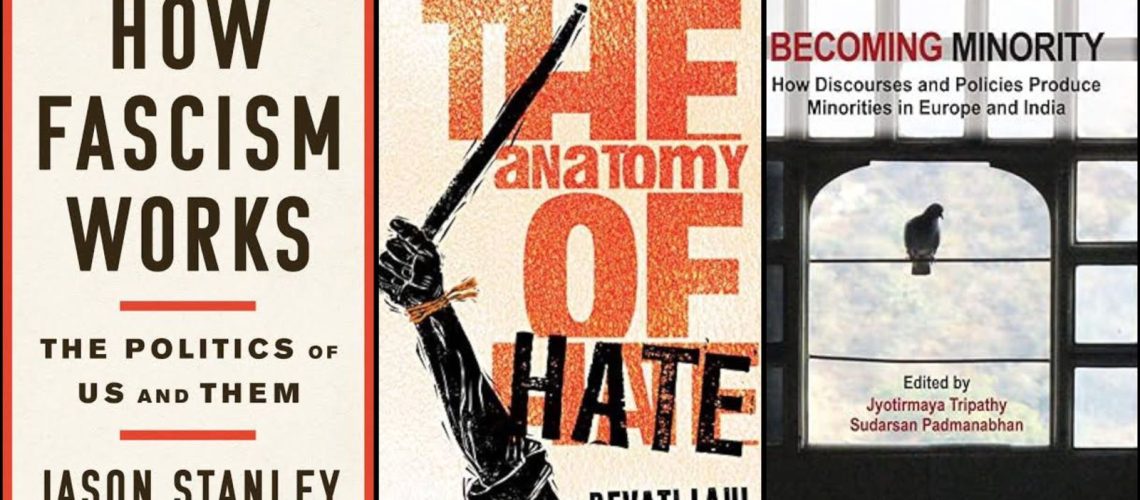
In a country where indifference is rewarded, and reposting an infographic counts as activism, picking up a book might just be the most radical thing you can do.
What we are witnessing is not the death of democracy, It’s the theatre of it.The stage is intact – elections held, flags waved, anchors shouting over each other. But the play is different. The characters are flatter. We now have democratic aesthetics without democratic ethics. Because now,apparently, unity looks like uniformity.
We’ve been here before , every era gets its own remix of “bhai-bhai.”, until someone benefits from our family feud. The actors change, the script doesn’t. What scares me isn’t just the violence – it’s that some people have grown disturbingly comfortable with it.
People expect that the death of democracy comes with censorship (It does actually), but what’s actually more efficient is self-censorship- the quiet moment when a writer thinks, “This won’t get published anyway.” Or when a student journalist – like me – spends more time editing out names than writing them in, and finally sighs, “Let’s not talk about that here.”
So what do you do in a moment like this – when someone turns the boundary between right and wrong into a skipping rope? You read. Because while conversations are throttled and facts folded to fit the play, libraries still don’t ask for your surname.
So read – because the story is being rewritten. And if you don’t pay attention, you’ll forget what the original even said.
Read what came before. Read because this has happened before. Read because the past isn’t just history – it’s a warning.
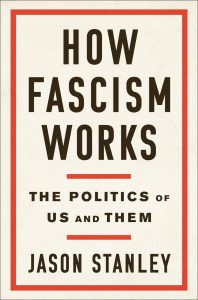
📘How Fascism Works – Jason Stanley
“No single book is as relevant to the present moment.”—Claudia Rankine, author of Citizen
A philosopher by training and the son of WWII refugees, Jason Stanley doesn’t just study fascism – he’s lived it. He shows us that fascism doesn’t always knock. Sometimes it just walks right in wearing a sadri and kurta,, smiling for the cameras. In this unnervingly prescient book, Stanley outlines the ten pillars of fascist politics – tactics that turn “us vs them” into law, wrap propaganda in the language of patriotism, and glorify a mythic past, criminalize minorities, attack intellectuals (because books are scarier than bombs), and shout “law and order” until no one remembers what justice looks like. . Drawing from Hungary, Poland, Myanmar, India, and the U.S., he makes one thing brutally clear: a country doesn’t need to be fascist to suffer from fascist politics. It starts small- a mythic past here, a criminalized minority there – until the rhetoric becomes policy, and the abnormal becomes Tuesday. Think of it as a red flag manual for democracies on autopilot. Required reading for anyone who still believes “it can’t happen here.”
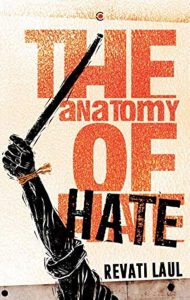
📘 The Anatomy of Hate – Revati Laul
What makes a person set fire to another human being? What makes them watch? What makes them rip out the foetus from within the womb with a sword and kill it , while a 14 yo hiding under a pile of bodies, pretending to be dead, watches?
In The Anatomy of Hate, Revati Laul peels back the skin of Gujarat 2002 and not just as your usual litany of political failures and victim testimonies. It’s far more unsettling. Laul stares into the abyss and introduces us to three of its citizens: Suresh, a career criminal with a vendetta as personal as it was communal; Dungar, a low-caste man trying to out-Hindu the upper castes that humiliated him; and Pranav, an upper-caste rebel whose riot participation was as casual as shoplifting, until guilt chewed through his spine.
What unites these three isn’t ideology- it’s brokenness.. Laul doesn’t give you caricatures or monsters. She gives you men- flawed, frightened, festering men who weren’t born evil, but got there with small steps.Because once we write off hate as inhuman, we lose the plot. Because here’s the kicker: the mob isn’t some anonymous mass of maniacs. It has names. It has mommy issues. It binge-watches the same shows. It holds day jobs and wedding grudges. It’s you on the wrong day, with the wrong crowd, and the right amount of powerlessness.
The Anatomy of Hate is a psychological autopsy- with Laul performing it in full view. Hate, she warns, is terrifying not because it’s alien- but because it’s almost disturbingly human.
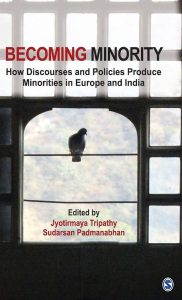
📘 Becoming Minority – Jyotirmaya Tripathy & Sudarsan Padmanabhan
What if being the majority wasn’t enough? What if you needed to feel like the underdog- just enough to justify dominance, just enough to cry foul every time someone else spoke? In Becoming Minority, Tripathy and Padmanabhan dissect how policies, populist rhetoric, and cultural anxieties are weaponized to manufacture a crisis: the imagined decline of the Hindu upper-caste self.
This isn’t a book about minorities. It’s a book about how the state and society produce minorities- not just through exclusion, but through majoritarian fear. The “minority” here is a political construct, engineered via debates on secularism, nationalism, reservation, gender, and of course, beef.
The genius (and horror) lies in how grievance is harvested from decades of privilege. How a dominant group begins to believe it is under siege- because someone else got a scholarship, a film role, or a voice.
Tripathy and Padmanabhan trace this sleight of hand across media, policy, and social discourse. It’s academic, yes-but dangerously relevant. Because once the most powerful start calling themselves victims, justice itself becomes suspicious.
This book asks the real question:
Who gets to feel like a minority in a country where majorities hold the mic, the mandate, and the mob?
So if you’re wondering what to do when the noise drowns the truth and neutrality feels like betrayal- start here. Read. Because reading isn’t passive. It’s defiance in print. It’s how you remember what justice sounds like when the slogans get louder and the facts go quiet.
Read like your democracy depends on it—because, quite frankly, it does.
