
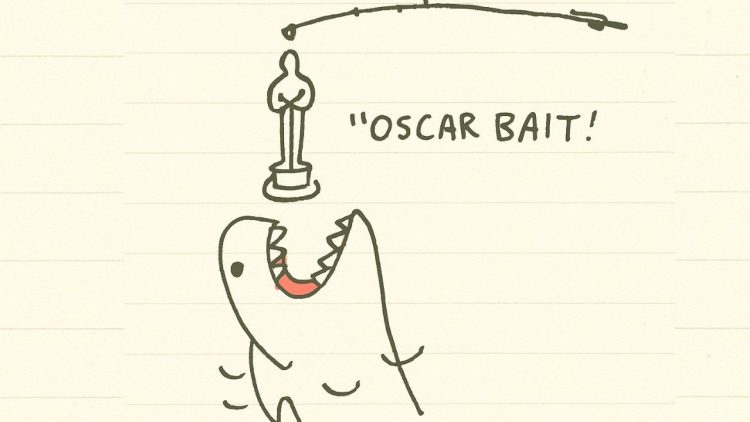
Why today’s most “important” films feel like homework – and what we’re losing in the process.
There’s a peculiar silence that follows the end of a prestige film – the kind reserved for funerals, or homework you’re proud to have completed.
It’s not the stunned, breathless silence that trails something breathtaking. It’s the silence of reverence, of obligation. The kind of hush we offer when we’ve seen something we’re told is good – something we know we’re supposed to admire.
This is the paradox of the Oscar-bait era: our most awarded films rarely move us. They press on us, heavy with historical pain, moral correctness, and visual austerity, but leave behind little but a vague sense of dutiful applause.
Every awards season, the world’s most lauded cinema is not the most alive, the most inventive, or even the most watched-it is the most morally dressed. These movies don’t want to be loved; they want to be respected. And if you don’t like them, clearly, you didn’t try hard enough.
Act One: The Performance of Prestige
In 2024, Oppenheimer swept the Oscars like a dutifully well-dressed valedictorian. Yes, Nolan’s film was technically stunning. Yes, it had scale. But at its core, it was a three-hour exercise in High Seriousness, where men explain war to each other in oak-paneled rooms and women are reduced to psychiatric shadows.
Cue: Florence Pugh naked and sad.
Cue: Cillian Murphy in profile, thinking.
Cue: a scene where someone says, “This will change the world.”
Hollywood’s idea of prestige these days? Men with tortured legacies and women with piano music playing softly behind them.
And Hollywood isn’t alone.
Act Two: The Bollywood Awards-ification
2024–25 has seen an unsettling trend in Indian cinema: the rise of the “festival film” that plays more like an application to Cannes than a movie. Let’s name names.
Ae Watan Mere Watan
A perfectly packaged tale of radio and rebellion, Sara Ali Khan’s earnest patriot in Kannan Iyer’s period piece ticks every festival box. It is historically reverent, politically risk-averse, and visually sepia-toned. The suffering is aesthetic. The rage is filtered.
“It’s the kind of nationalism that smells like sandalwood and cries once an hour,”- heard in whispers.
The Sabarmati Files
A 2025 release that tried to walk in the footsteps of The Kashmir Files, but without the venom or viral bite. Pain is staged. Violence is implied. Everyone emotes, but no one feels.
It wants to win an award, not an argument.
Ae Mere Dil ke Ashkon
(Coming soon to your closest jury festival)
You haven’t heard of it yet, but rest assured, it has a single-take rape scene, a blind girl with an iPad, and at least one monologue about freedom. It will win Best Film (Human Rights) at somewhere like Busan or Tallinn. You heard it here first.
Act Three: The Math of Manipulation
There’s a formula.
Take a trauma (Partition, caste, cancer, colonialism)
Add an underdog (preferably mute, blind, or oppressed)
Shoot in natural light
Cast someone “de-glam” (this year: Bhumi Pednekar in mud)
Title it in Urdu or Latin
Submit to Sundance
These aren’t bad stories. But too often, they’re stories told like moral obligations. Art made not for catharsis, but for red carpet. Prestige cinema is terrified of spontaneity. It doesn’t trust the audience to laugh and still care. It doesn’t believe that truth can arrive in colour, or catharsis in chaos.
Act Four: The Guilt in Pleasure
And so Somewhere along the way, we learned to apologize for joy.
Loving a film that’s bright, funny, or wildly entertaining now requires a qualifier: “It’s my guilty pleasure.” As if pleasure, on its own, needs to be excused. In this language, joy is frivolous. Whimsy is immature. Irony is dangerous.
You hear it all the time. People whisper their affection for Barbie or Badrinath ki Dulhania like they’re confessing sins simply because they dared to be emotionally accessible.
This is the fallout of prestige culture: it’s not enough to enjoy something. You have to suffer for it. Cinema that’s colorful, commercial, or comfortingly human is seen as unserious, unless wrapped in trauma or trimmed in grayscale.
So we shame joy. We reward austerity. And we forget that art doesn’t need to hurt to matter.
So What About the Fun Stuff?
Barbie – too pink, too playful, too busy making jokes about the patriarchy to win Best Picture.
Darlings – too dark, too domestic, too feminist for comfort.
The Worst Person in the World – too messy, too real, too unwilling to resolve neatly.
Laapataa Ladies – too rural, too witty, too feminist.
12th Fail – too honest, too quiet, too unpolished.
Heropanti 2 – okay, just bad. Even Oscar-bait needs limits.
When awards season ends, what’s left is not excellence but exhaustion. A string of films that made you feel bad, slow, and vaguely guilty for checking your phone.
Finale: What Pauline Kael Knew
Pauline Kael, high priestess of cine-snark, once wrote, “When we champion ‘art,’ we may be forgetting that what movies offer at their best is kinetic joy.”
She hated pretension. She hated moral piety. She liked films that bled, breathed, and broke rules.
We now live in the opposite world-where films beg to be graded like essays. Where watching feels like enduring. Where Oscar season (and its Mumbai mimic) is a mausoleum of meaning.
“Award-winning” should not be a synonym for “emotionally manipulative.”
Until we give up the cult of respectable cinema, we’ll keep applauding the same beige, brooding films over and over. And the only people truly thrilled by that? The ones holding the trophies – or those whose entire personality hinges on being the kind of person who “only watches classics.”
-Editor-in-chief typing free of guilt who still believes movies should move before they moralize.
