When we move around Lucknow University every day, we mostly think about our classes, our friends, our deadlines, and our own problems. We walk from one department to another, stand in canteen lines, sit under trees, and treat the whole campus as if it exists only for us. But sometimes, something small happens that completely changes the way we look at this place. It makes us pause. It makes us realise that this university is not only ours. It is shared. We live here with other beings who may not speak our language, but whose lives are just as real and active as ours. And once you notice them, it becomes impossible to ignore how beautifully we coexist with them.
DAY 1: THE DISCOVERY.
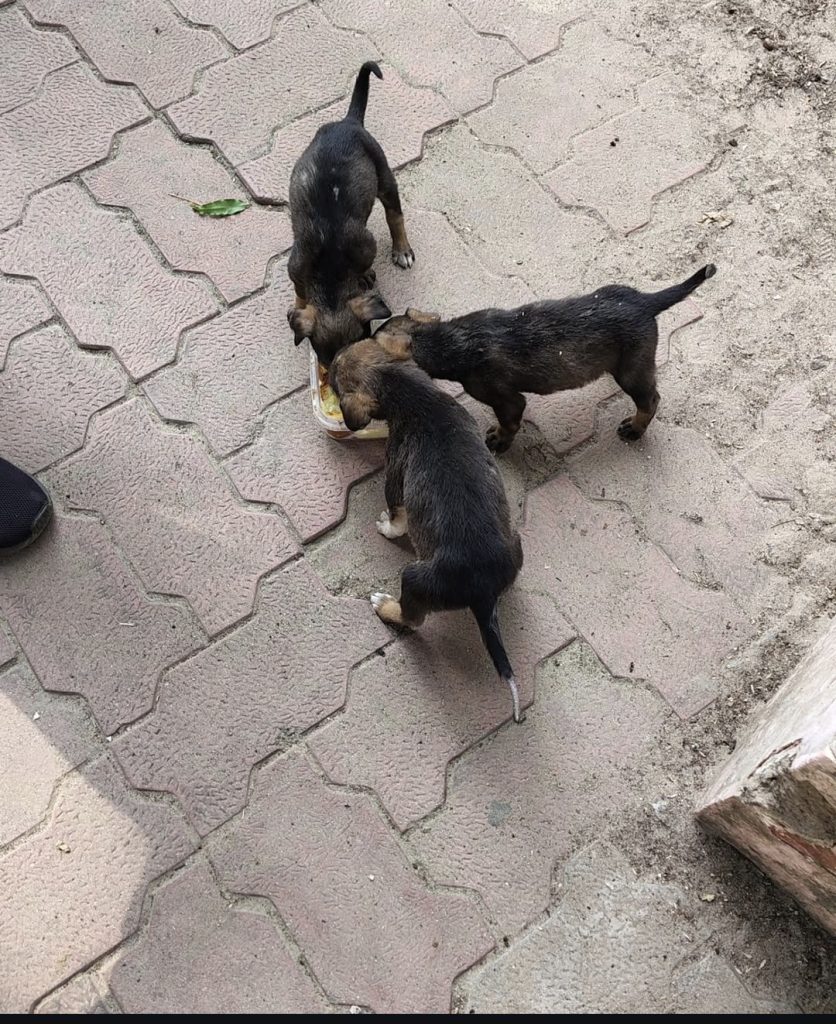
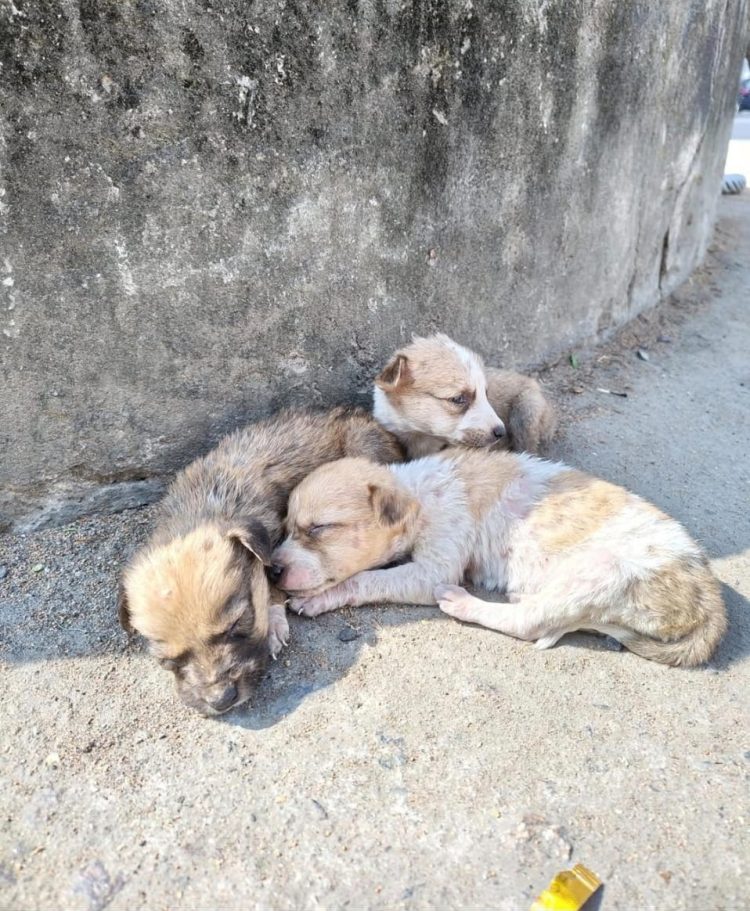
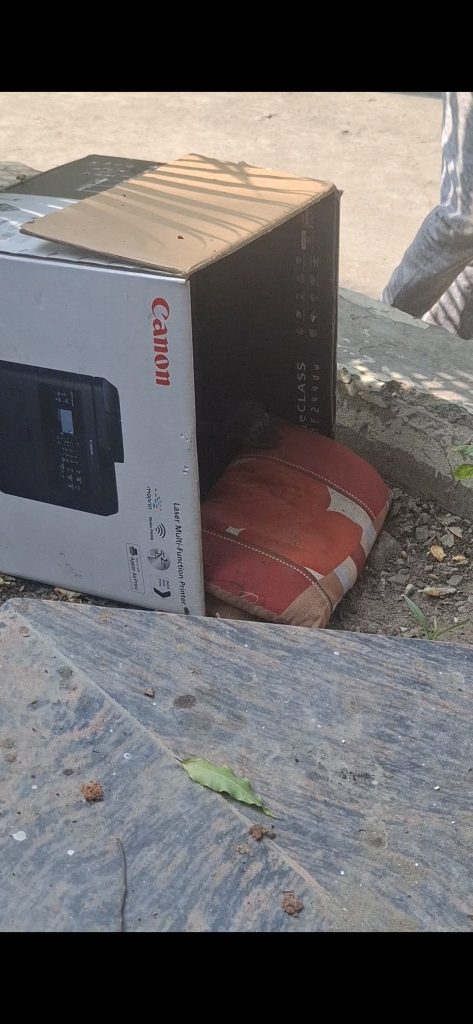
A few days ago, near Om Canteen, I came across a small group of newborn pups that reminded me of this in the simplest but strongest way. For a moment, I just stood there, surprised by how fragile and quiet they seemed. They were curled into the soil, eyes hardly open, moving slowly like newborns who are still figuring out the world. Their mother stood nearby, completely exhausted, but still watching them with the quiet alertness of a new parent. The whole scene felt gentle and vulnerable, and I found myself walking closer just to caress one of the pups. The moment I touched him, he turned out to be surprisingly naughty, wriggling around and trying to climb onto my hand with all the energy his tiny body could manage. He kept nudging my fingers, too, almost as if he thought I might be holding food, trying to look for something to eat, even though he was far too small to understand what he needed. It was such a small moment, but it instantly broke the stillness of the scene and made everything feel a little more alive. But what really caught my attention was the space around them. Someone had placed a big cardboard box and turned it into a little house for the family. There were blankets inside it, even a small pillow, and a clean bowl of Pedigree outside. It didn’t look like it was thrown together in a hurry. It looked like someone took actual time to make sure the mother and pups felt safe. I felt it must have been done by some student group or maybe an NGO, but then I noticed something that surprised me. Who did it : our university officials. They were standing around, talking softly, trying to convince the mother to eat because she hadn’t taken a single bite since morning.
“Yeh kuch bhi kha hi nahi rahi, itni koshish kar rahe,” he said, and somehow that single sentence spoke volumes.
When one of the pups tried nibbling on the solid food, they gently shifted the bowl away, worried he might choke. “Arey arey, yeh abhi nahi kha sakta”
It was such a small moment, but something about the care in it stayed with me. It made me realise that this campus holds far more kindness than we sometimes give it credit for.
Day 2: Gone…or so I thought
The next day, when I went back, the pups weren’t in the same place. The cardboard house was still there, the blankets were still neatly arranged, and the bowl was still full, but the family was missing. For a moment, I felt a strange disappointment, almost like the warmth I had seen the day before had disappeared. But a little ahead, under a bush, I spotted one of the pups sitting on a colourful handkerchief someone had placed for him. A small fire had been lit beside him to keep him warm in the cold. It was such a quiet gesture, done without any expectation, and it told me everything I needed to know about the kind of care these animals receive here.
When the mother finally appeared, emerging slowly from behind some dry leaves, she looked even weaker than before, but she went straight to her babies and began feeding them. Watching her, and watching how naturally people around her stepped in to support her, made something very clear. This wasn’t a random act of kindness. This was part of the culture of Lucknow University. Students feed stray dogs outside departments, staff leave food and water in corners, and everyone has heard about Pepper, the dog who practically became a part of the campus itself. My Zoology professor even told us that Pepper used to live near their department, and they were the ones who gave him the name. Caring for animals isn’t unusual here. It’s quietly woven into the everyday life of the university.
If you want to visit the pups, they’re usually somewhere around Om Canteen, though they move a little with their mother. If you go, you can carry something warm or even a packet of biscuits. Even sitting with them for a few minutes helps, especially now that winter is setting in. They’re tiny, and every small bit of care makes a difference.
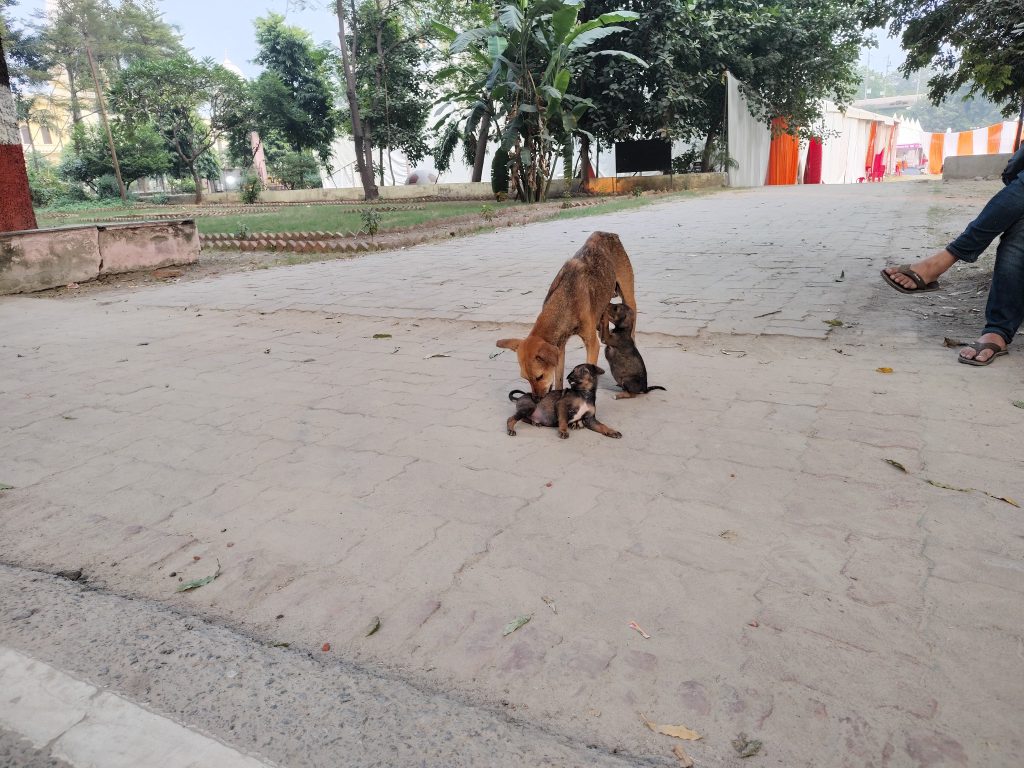
Whenever you have a few minutes between classes, stop by to meet them. Chat with the officials, cuddle the pups, it gives you a quick little boost in the middle of all the exam chaos.
This is exactly how LU sets an example. In a world where stray dogs are brushed off as “dirty,” LU shows that they, too, deserve care and a place to exist safely. And when you see this happening right in the middle of campus, it suddenly changes how you look at everything around you.
Somewhere between seeing them, losing sight of them, and finding them again, I realised something simple. We’re not the only ones growing on this campus. These pups are growing, too. They’re learning this space in their own way, finding their own corners, depending on the warmth people quietly leave for them. And maybe that’s what makes this university feel alive, the fact that so many stories, big and small, are unfolding here at the same time.