
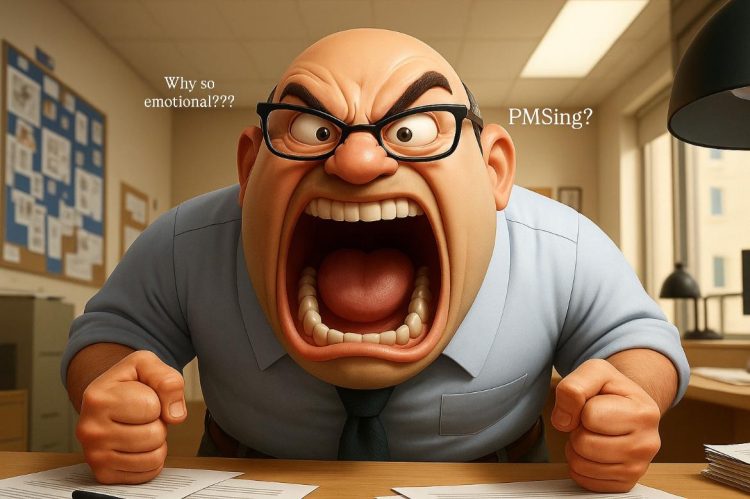
It is a question that, on the surface, reads like satire. But then you remember the tantrums. The unfiltered tweets at 3 a.m. The sulking after parliamentary debates. The blood-boiling monologues in war rooms. You recall the finger-pointing press conferences, the volcanic bursts of ego on global stages, the treaties torn in pique, the wars started in fury. You remember, too, the shaking jowls, the reddening faces, the refusal to admit error, because shame is too great an emotion to bear. And you start to wonder, less in jest, more in earnest, whether it is emotional instability, not rational detachment, that has long defined masculine power.
For decades, the popular myth has held that women, too soft, too sensitive, too swayed by feeling, were unfit for the ruthless objectivity of leadership. But what if the historical record suggests the opposite? What if it’s not empathy but unregulated anger that has done more damage in boardrooms and war cabinets alike? What if patriarchy has been one long, loud overreaction? What if the much-caricatured “emotional woman” is a straw figure, built, ironically, by emotional men?
The double standard is old as time. When women express emotion in public, they are pathologized, seen as unstable, hysterical, unfit. But when men display emotion, especially anger or aggression, it is reframed as righteous passion or moral conviction. The selective tolerance of emotion isn’t just sexist; it’s structurally dangerous.
The Fallout of Fragility
When emotional volatility goes unchecked in male leadership, it doesn’t just reveal character, it reshapes history and destabilizes institutions. From Nixon’s Watergate paranoia to Boris Johnson’s bluster-fueled Brexit gamble, we’ve repeatedly seen men in power privilege ego over consequence.
The recent spat between Donald Trump and Elon Musk offered yet another spectacle of high-stakes immaturity. What began as a disagreement over Trump’s so-called “Big, Beautiful Bill” quickly devolved into mutual threats. Musk denounced the policy as “a disgusting abomination,” while Trump responded by vowing to cut Tesla’s federal contracts and ominously invoking DOGE, the bureaucratic task force Musk once led, as a political weapon. Markets reeled, Tesla lost billions in value, and somewhere amid the playground fight, governance vanished. Musk, notably, escalated the conflict by dredging up long-suspected but previously unspoken allegations about Trump’s history of sexual abuse, including claims of child rape. That explosive revelation, however disturbing, came not from a principled sense of civic duty but seemingly as a retaliatory blow, disclosure only as vengeance. (But that is another discussion.)
The damage, in such moments, extends far beyond the personal. Decisions are made not through policy deliberation but through grudge matches. Wars are started, treaties torn, and economies jolted because fragile men in high places feel slighted. The inability to tolerate criticism, or to separate personal identity from public responsibility, has repeatedly led to catastrophe.
Whether it was George W. Bush’s war of pride in Iraq, or India’s crackdown on dissent under leaders who conflate opposition with insults, or who transform Parliament into their personal amphitheater – slow tears, measured pauses, while debate stalls and the unspoken question hangs in the air – who’s left to speak? (But again, that is another discussion.)
The pattern is depressingly consistent. Rage governs where reflection should. Retaliation replaces reason. And the collateral damage is borne by everyone else.
Men often speak of being denied the space to express emotion. And yet, we see anger aired freely, through shouting, sulking, power plays, and public outbursts. As if anger weren’t an emotion. As if the only feelings permitted are those that dominate rather than reveal. It’s not the absence of expression; it’s the absence of reflection.
The Calm of Competence
A counterpoint exists, and it is instructive. Consider the nations that have, over the last decade, been led by women: New Zealand under Jacinda Ardern. Finland under Sanna Marin. Germany under Angela Merkel. Denmark under Mette Frederiksen. Taiwan under Tsai Ing-wen.
These are not utopias, but patterns are emerging that cut across geography: lower rates of corruption, higher levels of citizen trust, fewer COVID deaths per capita, better health outcomes, more robust social safety nets, and notably, a greater sense of national contentment.
In 2021, a global Gallup poll measuring happiness and institutional trust found a strong correlation between countries with inclusive governance and higher well-being metrics. More often than not, these countries were led by women. The explanation is not biological. It is not that women are inherently better. It is that the path to power for women is so much narrower, so rigorously scrutinized, so allergic to missteps, that those who rise tend to be better prepared, more measured, and more collaborative by necessity.
They have to be. Men can fail upward. Women must fly straight.
Rethinking the Question
This isn’t a call for reverse essentialism. Men are not innately unfit to govern, just as women were never too emotional. But the question forces a reassessment, not of biology, but of how we define composure, competence, and credibility. Why do we valorize bombast and punish vulnerability? Why do we conflate shouting with strength, and poise with passivity?
The problem was never emotion itself. Emotion fuels conviction, sharpens instinct, makes a leader human. The trouble begins when those emotions, especially in men, are unexamined, unmanaged, and inflated to the size of a press conference.
Emotional intelligence, once dismissed as a corporate buzzword, now seems like the last guardrail between democratic function and primal scream. It means knowing the difference between urgency and panic, criticism and betrayal, diplomacy and a sulk.
The emotionally intelligent leader doesn’t flinch at accountability, threaten a journalist, invade a country, or nuke a budget because someone bruised their ego on cable news. They might, however, take a walk, read a book, or call their therapist, which, let’s face it, would be the most radical act some cabinets have ever seen.
It is easy to write off the question as satire. But satire, at its best, illuminates what truth has grown too familiar to see. The real provocation isn’t whether men are too emotional. It’s why we’ve refused, for so long, to admit they might be, while we’re still asking women to smile more.
