
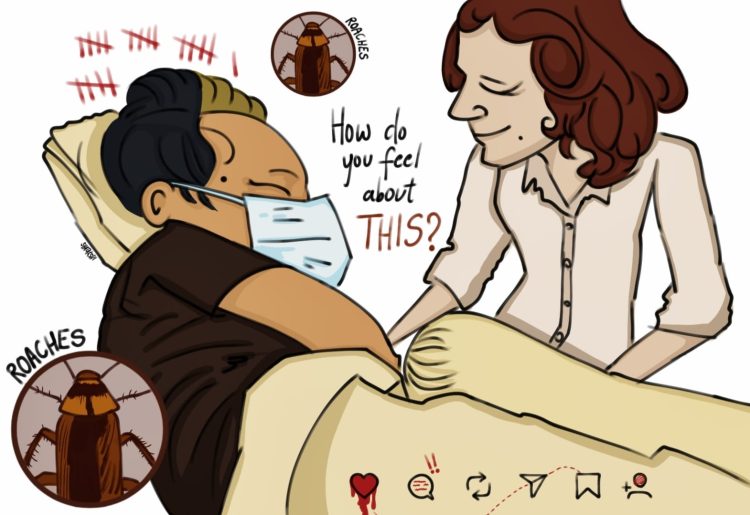
As society keeps progressing, we find ourselves more and more detached from the world around us in a manner that doesn’t invade our consciousness but sabotages it. Apathy is present in every facet of life, even more so now from what I’ve seen and observed. Though, I won’t be the first one to make this observation nor will I be the last one. You must be wondering… what am I getting at here?
Let’s get to the bottom of it. At first glance, this observation seems moot. After all, humans have always been this way throughout history. It’s not something that’s unique or exclusive to us in the 21st century but what is unique to us are the circumstances surrounding this apathy. For the first time ever, a significant chunk of the world around us is immortalised in a manner people would’ve dismissed as science fiction fifty to sixty years ago: The Internet. No, this is not your typical “internet bad” argument, far from it actually.
The challenge posed here by the existence of this new digital medium is that it has turned typical social dynamics on its head. All of a sudden, we’re living two lives at once: One in the real world and one on the internet. And most of the spaces we frequent on the internet are controlled by algorithms, which are systems that exist to identify our behaviour patterns and reinforce them. This also includes behaviour which is frowned upon or perceived to be rude, bigoted, toxic or hateful. When conversing in person, there’s an unspoken agreement of respect and while there are varying factors such as the nature, subject and the people involved within the conversation, we try to be respectful because it’s just basic human decency.
In juxtaposition, on the internet, there’s the fragile veil of anonymity and the implications that come with it. Suddenly, there’s no body to attach a name to, no face to identify someone with and that gives some people ammo to be malicious or hateful because they feel the things they say on the internet will never circle back to them in real life or at all, in some cases.
Now, the internet is not the sole reason for this phenomenon but it is a major contributor to it. This is not a failure of the internet either, It was designed to be this way in order to bridge the physical limitations we have regarding various things, namely communication. It’s working as intended but it also enables certain human impulses that are typically buried or within control in physical contexts. And a greater consequence of this manifests in such rhetoric becoming more and more common, so much so that it can be found under any post, reel, video etc. you may come across.
Open any instagram post for instance, and there will be a non-zero chance for you to find a comment that makes you appalled with thousands of likes on it. When found in sparse bursts, there’s a strong reaction, a brigade, a movement and a collective action to push back against such rhetoric. But when it’s found in abundance, like right now, slowly and slowly it becomes normalised, a part of the routine. Our senses become numb to it, dulled in a manner which doesn’t cause a strong reaction but perhaps a dismissive eye roll. And these are the cracks where apathy seeps through.
Almost everything about our current reality is tinged with a sense of despair, hopelessness, melancholy and a general idea of things staying the same while getting worse. We’re drowned by it while we ourselves are trying to stay afloat amidst an onslaught of despondence. Such circumstances will be reflected in the media we consume, create and engage with. And this is where the trap deepens.
As I mentioned before, algorithms work on behaviour patterns. And a common behaviour pattern is engaging with things which actively worsen our mood. You may know it as doomscrolling though it has a litany of forms. Our minds are frustratingly good at focusing more on the negative aspect of anything rather than the positive. And when we consume content that actively reinforces the despondent nature of our current reality… well this is where the feedback loop becomes self-sustaining. Apathy just doesn’t become a reaction but a mindset.
And these things don’t exist in isolation. They show up in real life too, trickling down from their digital counterparts into something very real and tangible. I’m sure you’ve seen some instances of this already, like people being more intolerant, more frustrated, more quick to anger, finding it easy to be hateful towards others etc. Many such examples exist and give us a glimpse into how deeply embedded and systemic this is. We’re not entirely blameless either, we’re complicit because we choose to engage, despite knowing better sometimes. It’s a flaw of human consciousness rather than something actively malicious. And this entrapment makes us involuntary participants and propagators of such attitudes and mindsets. Take a moment to think about the sheer number of systems around us that are designed to push us towards negatives and bleakness. And how they actively dull our ability to fight back against this push because we’re being constantly overwhelmed by it. We simply stop caring. We become apathetic.
This is where our agency comes into play. Pushing back feels herculean precisely because it is. Our minds prioritise what we already know: the familiar. Resistance is difficult, it’s unfamiliar. It’s the active choice to reject apathy and choose to feel. To show humanity beyond simple gestures. To care in a way that’s grounding and radical at the same time. The more we don’t care, the more difficult it becomes for us to see an alternative. I’m not trying to say this is easy. The exhaustion and burn out from all these constants is very real and makes it very difficult to resist but a greater freedom exists in trials and in our attempts to change things, not for the world, but for ourselves. Individual change can become collective. It’s a weighed burden. Much like our consciousness itself. But it’s one which offers a broader spectrum of living than something one-dimensional.
It won’t fix everything magically. It won’t heal the world, such an act is frankly impossible. But it’ll push us to heal ourselves and treat each other more humanely, to acknowledge each other’s struggles and work towards something that is a net benefit for us all.
I’d like to close this article with an example that should help you understand why such agency is required now. Currently in our country, there are mass protests going on organised by CJP.
These began on 6th June and the epicentre of the movement is Delhi, namely Jantar Mantar. Sonam Wangchuk, a beloved activist and educator of ours, had been on a hunger strike for 20 days as of 18th July. The strike and protests were a result of massive systemic failures across our country that led to many deaths within the youth and a growing frustration alongside dissatisfaction with the way things are. People had been practically begging for collective action. And then it came. And no one cared. Twenty one million followers and more on instagram but thousands in attendance. The government didn’t care because it ignored and has been ignoring these protests and this strike for weeks now. No response, no accountability. The citizens didn’t care enough to show up or even show support in whatever ways they could. The youth, the main voice behind this movement, didn’t care enough to voice their dissent in greater numbers.
Yes, people attended and yes, people showed up but such a mass movement barely gained traction across so many spheres of life. The message was clear: People didn’t care. And what did it result in? Sonam Wangchuk got forcibly removed from his Hunger Strike after the Delhi High Court issued an order for him to be transferred to an ICU due to his ailing health from the strike. Police came and took him away. And when that was done, police descended on Jantar Mantar itself and started detaining protestors left and right, forcing them to flee.
This is what Apathy leads to within our very lives, systems and in our actions. Something that should’ve been a boon became a blur in the eye of most which led to a greater crackdown by the very system these people were arrayed against, rather than elicit a more rousing reaction from the general masses. And this is why agency and empathy must triumph in the face of endless adversity. There will always be systemic issues beyond our control but change can be enacted through our actions, agency and empathy. We must react or such incidents will become the norm rather than stay an exception.
