
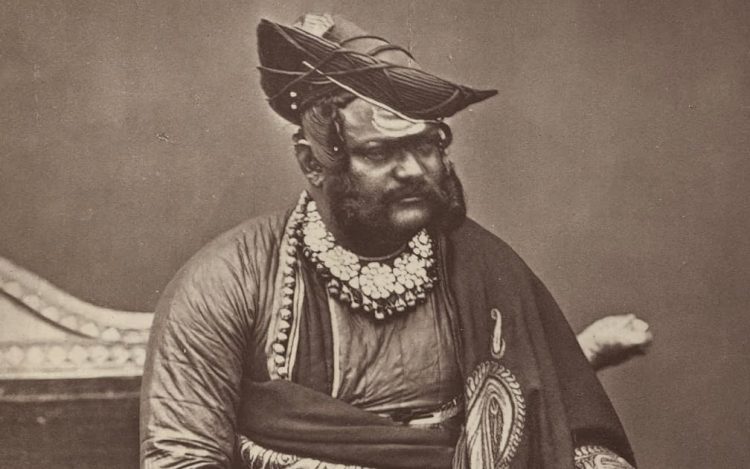
As we walk into today’s world, a man wearing a pearl necklace around his neck, rings in his fingers, earrings in his ears, often finds his masculinity put on trial. Comments and judgement begin: “Gay” “Chakka” “Hijda”. What is ironic is that these accusations come from a society that prides itself on tradition and culture. Jewellery on men today is seen as rebellion, as a challenge to gender norms. Long before fragile masculinity was manufactured, jewellery was never about gender; it was about identity, divinity, authority, confidence and self expression.
But do you know, In Indian Culture, wearing ornaments was never cosmetic or feminine but was considered sacred.
Lord Krishna wears peacock feathers, gold necklaces, armlets, earrings symbolises divinity. Lord Shiva wears rudraksha beads, serpent, crescent moon on his head and ash as an adornment. None of these adornments were ever questioned for being “feminine”. In fact, they strengthened divine masculinity. If jewellery weakened men, God would never have worn it.
But they were God.
Okay let me tell you about humans.
Long before social media dictated style, Indian kings defined masculinity through presence, power and ornaments. Rajput warriors used to wear earrings as symbols of bravery and lineage. Mughal Emperors like Akbar and Shah Jahan adorned themselves with pearl necklaces, gemstone rings, and elaborated turbans with jewels- not to impress but to assert dominance and sovereignty.
Jewellery in the royal India showcase class where a ring sealed commands, a necklace displayed wealth, and an earring symbolised courage. These men in history ruled empires, and shaped history without feeling that jewellery compromised manhood.
So how did the idea that masculinity can only be proved by not jewellery begin?
Colonialism.
It was Colonialism that rewired Indian Masculinity. They didn’t just loot Indian land and wealth, it colonised the Indian mind. The idea that jewellery is unmanly did not come from Indian tradition-it came from colonial influence.
British rulers mocked Indian kings for their ornaments, calling them effeminate to justify dominance. Over time, Indian masculinity was reshaped to fit colonial ideals: restrained, rigid, emotionless and stripped of ornamentation.
What was once royal became ridiculed. What was once divine became decorative. Basically the message was clear: to be modern, you must abandon your culture; to be masculine, you must look like us. What we now call “traditional masculinity” in India is, ironically, “colonial masculinity”.
So when a modern man is mocked for wearing pearls or rings, it is not society defending culture, it is colonial programming.
It is the echo of foreign rulers who once said: “You are not man enough to rule yourselves.” And every time we shame an expression, we unknowingly agree.
So when a man is called “Gay” “Chakka” “Hijda” because he wears pearls or earrings or rings it exposes a dangerous confusion between expression and orientation. Sexuality is about who you love, not how you dress. Jewellery announces confidence not desire. Indian history never used ornaments to define sexuality.
Jewellery was power, and still is.
In India, jewellery was an armour of identity. God wore it to signify cosmic balance, kings wore it to rule, men wore it to express faith, courage and status. Today when a man wears jewellery by choice, he is not rejecting masculinity, he is reclaiming it. The discomfort arises not because jewellery is new, but because confidence without permission threatens fragile norms.
If your idea of masculinity collapses at the sight of a ring, it was never rooted in culture- it was rooted in fear. Also, Indian masculinity was never about dullness or denial. It was expressive, spiritual, powerful and unapologetically adorned. From temples to thrones, from God to warriors, jewellery amplified presence- it never diluted it.
After reading my article I want you to answer my question from your inner self….
Who commands more respect?
A king wearing pearls and jewel stones or a toxic macho man.
So the next time you see a man wearing pearls, rings or earrings, remember not to question his sexuality and identity but to praise his confidence because he is not challenging Indian culture, he is standing closer to it than those who mock him.
History stands with adornment. Insecurity stands alone.
